Flight School Basics: What Every Hopeful Pilot Must Know
When I first walked into a flight school workplace, the odor of air travel gloves and dry-erase markers felt almost ritualistic. There was a buzz of ambition airborne, a type of electricity that makes you think you can bend gravity with the right collection of controls and an instructor who can equate really feel right into technique. Over years of mentoring brand-new pupils and training pilots via the early hours of dawn and late evenings of paperwork, I learned that the path to coming to be a pilot is less concerning one solitary flash of genius and even more about stable investment: careful method, honest comments, and the discipline to turn up repeatedly, rainfall or shine.
Flight school is greater than acquiring hours. It is an individual craft, a collaboration in between trainee, environment, and the equipment you are discovering to pilot. The cockpit comes to be a gym for the mind as much as a workshop for your hands. In this item, I want to draw up the useful core of what you need to expect, what to prioritize, and how to browse the inevitable trade-offs that turn up heading to your very first solo and beyond.
A practical frame for entry
Most individuals begin with a clear goal: I intend to become a pilot. Yet the journey is rarely direct. It begins with selecting the appropriate school, after that straightening expectations with facts of training, finance, and the large time commitment. The options you make early will certainly resemble through every trip you take later, forming your self-confidence and your capability to fix when something goes wrong.
The first decision is the college itself. Not all programs are produced equivalent, and the very best option for you depends on your existing life scenario. Some striving pilots are handling full time tasks, household duties, or college timetables. Others may be attracted to a high intensity program that presses training right into a much shorter window. The essential question is not which institution seems most glamorous yet which framework lines up with your learning design and your pocketbook.
I have seen trainees be successful in both spare-time programs and permanent academies. The distinction has a tendency to turn up in three core locations: uniformity of instruction, accessibility to trip time, and the assistance network that maintains you moving when the climate turns inadequate or you struck a rough patch in a lesson. A good flight school will certainly inform you truthfully what to anticipate concerning hourly prices, airplane accessibility, and the common rate for proceeding from exclusive pilot to instrument ranking or industrial pilot as your passions dictate.
The intimate range of the cockpit
A pilot training program is, at its heart, a hands-on apprenticeship. You won't find out to fly by reviewing a handbook alone, and you will not come to be competent by watching somebody else do it for you. The aircraft educates you through a comments loophole: you attempt a maneuver, the plane responds, the teacher helps you analyze the response, and you readjust your control inputs accordingly. This is not just mechanical repeating; it is a dialog with physics, climate, and your own mental design of the airspace.
That dialog begins on the ground. Pre-flight preparation matters as high as the moment the engine coughings to life. The ground rundowns cover weather analysis, weight and balance computations, gas preparation, and emergency situation procedures. The flight itself ends up being a series of little experiments: develop secure straight-and-level trip, technique gentle turns, coordinate with tail, take care of power, and display airspeed signs. Every lesson develops a brand-new layer of understanding, a deeper sense of how your airplane acts in the margin in between tranquil and a hint of turbulence.
Weather, time, and the taste of risk
Weather is the most unforeseeable instructor at flight school. It is the terrific equalizer that advises you that aviation is not a sporting activity of excellent conditions however a craft of regimented choice production. You will certainly discover to read a METAR and a TAF with confidence, to translate wind shear in a gusty afternoon, and to choose when to suffer a front that stubbornly sits over the area. The very best students find out to respect weather not as a barrier however as a consistent subject of discussion between the pilot and the environment.
There is a useful rhythm to this. The first few weeks are about building comfort with the basics while the weather condition is forgiving. If you have a stubborn stretch of high stress and clear skies, benefit from lengthy session to lock in treatment, after that make use of a run of lighter days to focus on the psychological math of navigating and airspace guidelines. Later on, when tornados roll in and visibility clings to the ground, your self-confidence is tested not by the air's present, but by your ability to apply what you recognize under more requiring constraints.
From exclusive pilot to tool score, and beyond
For numerous, the initial turning point is the private pilot certification. It is the portal to more comprehensive adventures, the moment you are enabled to fly solo under aesthetic trip regulations and to carry a guest lawfully. The demands vary by nation and jurisdiction, yet a typical thread is a mix of flight time, understanding tests, and presentation of functional abilities. In the USA, as an example, the FAA requires a minimal number of flight hours, a composed expertise examination, and a sensible exam. The exact hours can be a relocating target depending on the rate of your training, the weather condition, and how successfully you take in procedures.
Once you have the private certification in your logbook, several trainees march ahead toward instrument rating. The tool stage is a shift from taking care of the airplane in open, friendly daytime to preserving control and positioning under abject visibility and high work. This is where you begin to treat the cockpit as a system that need to operate under a more comprehensive collection of restraints: exact trip preparation using a trip monitoring attitude, disciplined cross-checks of instruments, and an admiration for how navigating comes to be a procedure rather than a routine.
The next stage is the business certificate or a focus on specialized tracks such as flight instruction, company aeronautics, or air transport. Each course has its very own needs and its own reward. The industrial path highlights mastery under time stress, efficiency, and a deep understanding of system performance. It is not uncommon for pilots to build up hours with educational flying or aerial work as a means to strengthen hands-on proficiency while developing the hours needed for the following called on the ladder.
The long view, self-control, and the day you solo
I often inform trainees that the actual magic of flight school takes place just after you have your solo flight under your belt. The first solo is an initiation rite, yes, yet it is additionally the minute when the aircraft stops being a device your trainer assists you manage and begins sensation like a partner you must pay attention to carefully. The solo is not a climax even a turning factor. It confirms to you that you can manage the duty of an airplane when no person else is leading you in the cockpit.
To reach that minute, you have to satisfy a set of nonnegotiable practices. Uniformity in technique, thorough focus to pre-flight checks, a preparedness to learn from blunders, and a willingness to look for feedback when something does not feel right. This is not glamorous job. It holds your horses, ordinary work that generates compound benefits. The far better you are at turning up in a timely manner, executing specific checklists, and applying improvements after a mistake, the faster your progression will certainly be.
Gauging cost and the investment of time
No discussion of flight school is total without addressing price and the toll on your schedule. The numbers vary extensively depending on where you train, the type of airplane you fly, and the price for trainer time. A rough sense of the landscape is handy: the per hour rate for flight time can vary from mid-thirties to well over one hundred dollars, depending on whether you are in a regional area with older instructor airplane or a busier airport with newer platforms. Along with guide flight hours, there are ground training costs, exam charges, and devices such as headsets, plotters, and navigating charts. For a regular track from no to personal certification, many students spending plan numerous thousand dollars for the airplane time itself, plus a considerable additional quantity for instruction and products. If your goal is eventual airline preparation, you should likewise prepare for the greater time and training financial investments that feature tool and business ratings.
The finest practice I have actually seen is to treat training as a job with turning points instead of a sprint. Define your objective, after that https://drive.google.com/drive/folders/1UPNa_7-zETjWVUvMtJaiuOLuQm_5bCK1?usp=sharing set out a practical schedule that permits weather delays and life disruptions. Utilize this plan to establish a month-to-month target for trip hours, ground study, and proficiency tasks. The rigor of a well-structured plan creates a safety net that keeps you moving, even when inspiration dips or schedules collide.
Two sensible roadmaps you can borrow
Starting and sticking with flight school requires a blend of tactical actions and lasting psychology. Below are two portable roadmaps attracted from real-world experiences of trainees at different stages of their journey. Use them as lenses to review your very own plan instead of as rigid prescriptions.
-
The stable mountain climber: this course highlights consistent, regular development with convenient regular goals. It prefers a campus or neighborhood flight school with secure aircraft accessibility and predictable trainer protection. Expect to construct ground knowledge in parallel with flight time, allowing concept and hands-on method enhance each other. The emphasis gets on habit formation-- day-to-day review of flight logs, end-of-day debrief notes, and a cadence that maintains a trainee from drifting right into spaces in knowledge.
-
The ambitious accelerator: this path matches someone that can commit substantial blocks of time over a couple of months, possibly in a break between work or throughout a sabbatical. In this setting, a trainee may fly 5 to 7 days a week, stacking tool and cross-country preparation into the routine. The danger is exhaustion, but the reward can be a much faster shift to innovative rankings if the pupil maintains exceptionally disciplined study behaviors, leverages simulator time, and utilizes every weather condition home window to practice.
The human component inside the cockpit
Behind every hour airborne is a person that needs to discover to take care of self along with machine. The most efficient students cultivate a set of soft abilities that maintain them safe and teachable when the unavoidable friction develops. Below are a couple of constants I have actually observed in successful trainees:
- Humility paired with interest: you are never ever done understanding. The minute you think you understand all of it is exactly the moment you need to pause, take a breath, and ask the teacher to walk you via an action you could be missing.
- Meticulous lists as cognitive scaffolding: prosaic as it seems, the day you deal with a list as sacred is the day you gain a security margin that cash can not buy.
- Sharp situational awareness: having the ability to analyze a small change in wind, a wobble in the aircraft, or a small instrument disparity and convert that right into activity makes the distinction in between a great pilot and an unsafe one.
- The ability to equate anxiety into focus: anxiety is natural when you are attempting something as consequential as flight. The trick is to acknowledge it without allowing it pirate your choice making.
Anecdotes from the hangar floor
I remember a student that liked the feel of the controls yet struggled with crosswind touchdowns. The very first numerous efforts ended with a light bounce and a self-deprecating grin. We stopped focusing on the touchdown technique in isolation and started speaking about wind understanding, gust timing, and the crosswind correction as a vibrant decision each time the aircraft slowed down to a delay warning. After a few simulated wind checks and a handful of monitored touchdowns, the trainee began to anticipate gusts and change early instead of chasing the airplane with last-second inputs. The improvement was not remarkable in a solitary mid-day; it took place slowly, as the pilot learned to trust the air and possess the airplane in a much more integrated way.
Another trainee involved flight school with a pile of senior high school scientific research and a desire for flying commercially. The spending plan was moderate, and the routine called for mindful preparing around a day job. The breakthrough came not in a single brilliant moment, yet in the change from seeing navigation graphes as an examination to viewing them as a map of possibilities. The pupil discovered to outline cross-county legs with a level of self-confidence that stunned both people. It was not the sheer speed of finding out that changed points; it was the ability to stare down complexity, damage the issue right into smaller items, and afterwards rebuild a strategy that worked with the day of the flight.
Ground truth concerning the student experience
I intend to offer an honest picture of the psychological terrain that trainees navigate. Expect tops of enjoyment when a new skill finally clicks, complied with by troughs of disappointment when a treatment verifies persistent. You will experience a mix of self-reliance and dependence-- freedom in the cockpit, reliance on a person teacher that can equate a harsh sensation into an accurate command. You will certainly likewise face sensible facts: weather hold-ups, maintenance issues, and periodic no-show lessons that compel you to reassess your weekly targets.
In practice this means adopting a healthy and balanced viewpoint on threat. The aim is not to chase a perfect document however to grow regular, defendable routines. You will learn to approve that a grounding in security requires claiming no to a trip when the climate is questionable or when your current psychological state is not for carrying out at your finest. It is a mark of maturation to identify that looking after on your own is a crucial part of being a responsible pilot.
Checklist for starting flight school (2 succinct listings)
To honor the two-list guideline while maintaining functional guidance front and facility, right here are 2 small lists. Each listing includes five items, and they are designed to be used as fast referrals as you begin and proceed with your training. Utilize them as tips as opposed to as inflexible steps.
-
First steps prior to you enroll
-
Research neighborhood options and inquire about airplane availability and teacher ratios
-
Understand real price structure, including charges beyond trip time
-
Schedule a check out to see exactly how the school takes care of student support and facilities
-
Check if the program consists of an organized ground college or if you need outdoors materials
-
Talk to existing trainees regarding their experiences and outcomes
-
Early training fundamentals to master
-
Pre-flight preparation and efficiency calculations for standard flights
-
Basic airframe and engine understanding, consisting of exactly how to execute an extensive walkaround
-
Controlled trip maneuvers at reduced danger, focusing on stability and coordination
-
Basic radio treatments and basic interactions etiquette
-
Emergency procedures and uncommon situations you should recognize and react to calmly
The unavoidable trade-offs you'll face
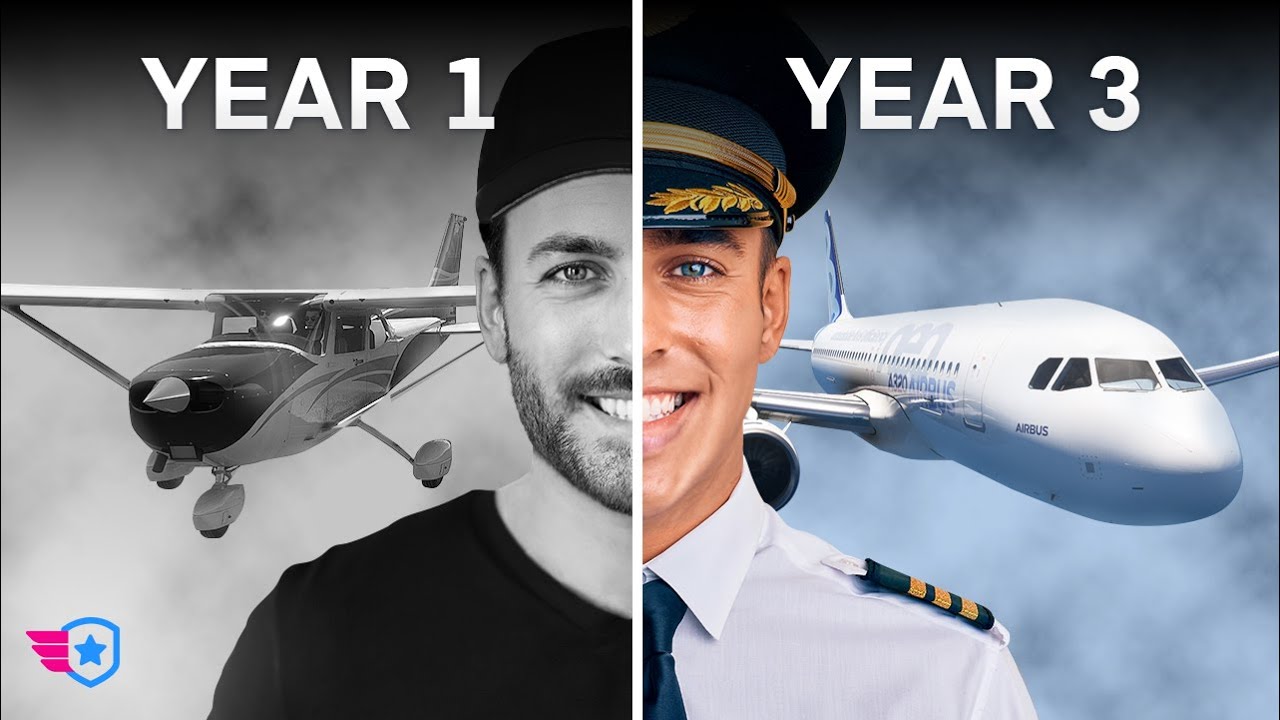
No path from pupil to pilot is free of rubbing. There are options that require trade-offs between speed, price, and deepness of knowing. If you chase rapid development, you might face greater expenses, tighter routines, and much more extreme research sessions. Slower, steadier progression can decrease tension and enhance retention but may seem like a slower arc towards your objectives. The best pilot can customizing a plan to their very own personality, life dedications, and appetite for risk.
There is likewise a practical compromise in the high quality of training aircraft versus the cost per hour. Some institutions make use of older or easier trainer aircraft since they are less costly to run, which converts right into lower hourly prices yet can require more attention to keep mechanical technique. Various other schools buy newer trainers with glass panels and four-axis trip administration. The experience distinction can be meaningful, especially as you come close to instrument training, where avionics intricacy comes to be a main aspect of learning.
Another refined however essential compromise is the teacher connection. A single instructor can be a stimulant for advancement, or a bottleneck if their timetable is limited. Some pupils love one regular mentor who knows their staminas and weak points thoroughly; others benefit from a rotating set of instructors that reveal them to a wider series of methods and point of views. There is no global right solution right here. The secret is to weather the early phase with a discovering way of thinking, look for responses proactively, and straighten with a trainer or program that matches your temperament and goals.
Beyond the store front: constructing a pilot's life
Training is not only concerning the aircraft. It is also concerning constructing a network, absorbing functional aeronautics society, and keeping the stamina necessary for lengthy courses. You need to consider how your life will adapt to the needs of a training timetable. That consists of sleep self-control, nutrition, and the ability to manage traveling if your flights involve a cross-town hop or a nation range to a favored training field. The best pupils learn to shield their mental energy and to make use of downtime to combine knowing instead of allowing tiredness deteriorate progress.
The function of simulators and completely dry runs
The contemporary flight school commonly consists of a mix of real trip time and simulator time. A well-run simulator program provides a low-risk atmosphere to practice treatments, handle cockpit console changes, or rehearse rehearsals for more challenging circumstances. The benefit is obvious: you can repeat a maneuver up until your muscular tissues and eyes line up with the right response, without taking in a precious aircraft hour and weather limitations. When you come close to instrument training, the simulator ends up being a crucial wedding rehearsal space for cockpit discipline, cross-checks, and choice making under pressure.
Your path is distinctly yours
In completion, the story that matters is your own. Everyone who ends up being a pilot has a different backstory, different restraints, and different factors for pursuing this life. Your factors might be a long-lasting desire to overlook the globe, or a functional decision to go into a profession that compensates discipline and precision. Whatever the motive, the engine that drives a successful flight training experience is a mix of motivation and method, of ambition and accountability.
As you browse the weeks and months ahead, keep in mind that progress is typically step-by-step. You might feel you are relocating gradually when determined versus a glossy pamphlet or a social networks feed that promises instantaneous progress. In reality, air travel incentives those that log hours with objective, that seek feedback with an interested stance, and who can equate a harsh sensation in the cockpit right into an accurate action.
A final functional invitation
If you read this as a prospective trainee, take a moment to draw up your very own assumptions against what you have learned right here. See a handful of institutions, speak with instructors and current pupils, and inquire about the day-to-day rhythm of training. Ask for a few sample lesson plans and a transparent price quote of the yearly price for the preliminary phase you are taking into consideration. Look for a school that treats security, mentorship, and continuous knowing as core values, not as advertising slogans.
The most purposeful success is not a number pinned to your logbook yet a sustained ability to handle the air with calmness, clearness, and competence. You will not end up being a terrific pilot overnight, and you do not require to. You end up being a pilot via repeated, purposeful practice, through straightforward comments, and via the stubborn willingness to appear, again and again, to do the job that matters.
If you lug these concepts with you into your initial lesson, your experience is most likely to unravel in such a way that really feels human, based, and inevitably satisfying. The airplane is an amazing tool. The art of flying is the craft of shaping your reactions to its phone call, developing confidence a little at once, with the humbleness to discover and the guts to take the next step.